
Guides · Tue 24 Nov 2026
Da Lat: Vietnam's highland city of flowers and cool air
Da Lat sits 1,500 metres up on the Langbiang Plateau, and everything about it follows from the altitude: average temperatures in the teens and low twenties, pine hills, French colonial villas, and a flower industry that supplies the rest of Vietnam. How to order the city in two or three days, the lake, the flower gardens, the old railway station, the falls at Datanla, and the honest seasons, dry from November to March, wet and misty the rest of the year.
Every other city in Vietnam makes you plan around the heat. Da Lat makes you pack a jacket. The city stands about 1,500 metres above sea level on the Langbiang Plateau in the southern Central Highlands, in Lam Dong province, and its climate is the whole story: average temperatures run from about 14 to 23 degrees Celsius across the year, mist sits in the valleys on most mornings, and the local saying gives the city four seasons in a single day, spring in the morning, summer at noon, autumn in the afternoon and winter at night. The French colonial administration built it as a hill station after the explorer Alexandre Yersin recommended the plateau in the 1890s, which is why a Vietnamese highland city has lakeside villas, a cathedral, an art deco railway station and a miniature Eiffel Tower shaped radio mast. Vietnamese travellers come for the cool and the romance, and the city has a second working identity underneath the tourism: it grows the temperate produce the tropical lowlands cannot, flowers above all, plus strawberries, artichokes, persimmons and coffee. This guide orders the city for a first visit of two or three days. Our events calendar carries what is on in Da Lat, including its flower festival season.
The centre: the lake and the market
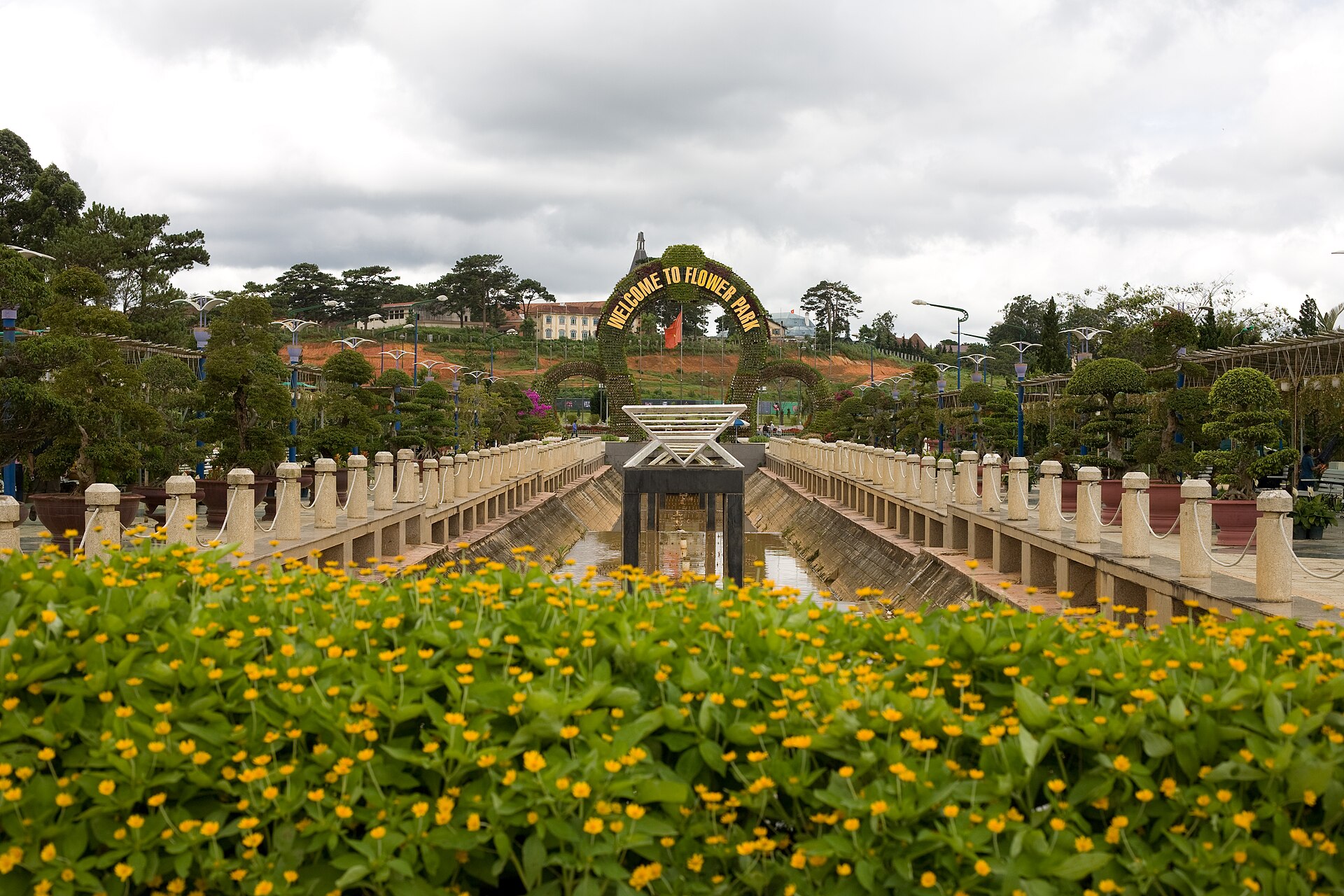
Start where the city starts, at Xuan Huong Lake, the crescent of water in the middle of Da Lat, about 5 kilometres around its shore path. The morning walk around it is the city's daily ritual: mist on the water early, coffee stalls opening, the flower gardens at the northern end, and the whole plateau town arranged around the shore. Give the full circuit an unhurried hour and a half, or cut across at the bridges and take half of it before breakfast. The lake is the orientation point for everything else in this guide: the market is just south of it, the Flower Park at its northern tip, and most visitors sleep within a few streets of its shore.
Da Lat Market, a short walk from the lake, is the city's working centre and its best evening food stop. By day it trades in the plateau's produce, strawberries, preserves, artichoke tea, dried persimmons and flowers in quantities that explain the city's economy. By night the streets around it fill with the highland street food circuit: grilled rice paper, banh trang nuong, sometimes called Da Lat pizza, hot soy milk, grilled sweet potato and corn, and small hotpot and barbecue stalls serving a crowd that is mostly Vietnamese holidaymakers. Eat here on your first evening rather than in a restaurant: it is the fastest introduction to how Da Lat feeds itself, and the cool night air is half the flavour.
The flower city, taken seriously
The flower industry is not decoration here, it is agriculture, and the city grows three signature flowers at commercial scale: hydrangea, the Da Lat rose and the golden everlasting. The Da Lat Flower Park beside the lake is the concentrated version, beds, bonsai and orchid houses in a municipal garden, worth an hour, best early before the tour groups. The fuller version is the growing country immediately around the city: flower villages such as Van Thanh, where rose greenhouses run down the hillsides, and the hydrangea fields on the city's edge, which open to visitors in bloom season. The city's own calendar peaks with the Da Lat Flower Festival, held in the winter season, usually around December, when floral displays take over the lake shore and the centre; our calendar lists the confirmed edition dates as the organisers publish them, and the honest planning note is that festival weeks are the busiest and most expensive of Da Lat's year, booked out well ahead by domestic travellers.
The seasons of bloom matter more than any single garden. Late autumn brings the wild sunflower, da quy, flowering gold along the roads into the city. The coldest weeks bring mimosa and then the mai anh dao, Da Lat's cherry blossom, along central streets such as Tran Hung Dao in the early months of the year. Hydrangeas carry the middle of the year. A visitor in any month gets flowers; a visitor who times the trip gets a specific hillside in a specific colour, and the difference is worth a calendar check before booking.
The colonial layer: station, palace and villas
Da Lat's French period survives as a walkable layer rather than a museum. The Da Lat Railway Station, built in the 1930s in art deco style with a pointed roofline echoing the plateau's peaks, is the city's most photographed building, and its remaining working service is the short heritage run of about 7 kilometres to Trai Mat, a slow out and back through market gardens that works as an excursion in itself. Check the departure board at the station on the day, as the timetable varies by season and demand. The Bao Dai Summer Palace, the 1930s residence of Vietnam's last emperor, keeps its modernist rooms and gardens on a pine hill south of the centre and gives the colonial story its domestic scale: this was a working holiday house for a court escaping the heat of Hue, which is exactly the impulse that built the whole city. Between the set pieces, the villa streets on the hills around the centre, Tran Hung Dao above all, carry the rest of the period in private houses, hotels and pines. Walk one villa street slowly on your second morning and the hill station idea stops being history and becomes obvious.
Out of the centre: falls, lakes and the high country
Da Lat's excursions run in every direction and the honest advice is to pick one per day rather than stack them. Closest and easiest is Datanla, a waterfall in a pine ravine a few kilometres south of the centre on the Prenn Pass road, reached by an alpine coaster that has become an attraction equal to the falls themselves: a 2,400 metre track through the forest, which the operator describes as the longest in Asia, with rider controlled braking, so the descent can be a scenic glide or a fast run. The falls sit at stops along the track, and the coaster stops operating in rain, which in Da Lat means mornings are the reliable slot.
Book the Datanla alpine coastervia Klook · affiliate link
Further out, Tuyen Lam Lake, a large reservoir in pine forest south of the city, pairs with the Truc Lam Zen Monastery above it, reached by cable car or road, for the quiet half day: monastery gardens, lake views, boat hire on the water. To the north, Langbiang Mountain, the plateau's signature peak at over 2,100 metres, is the active half day, a steep walk or jeep ride from its base village to a summit ridge with the whole plateau laid out below. And for travellers with a full spare day and a taste for the dramatic version of the falls, the canyoning tours at Datanla, abseiling and sliding down the waterfall system with trained guides, are the city's established adventure product, run only in conditions the operators judge safe, which in the wettest months can mean not at all.
Book Da Lat canyoning at Datanlavia Klook · affiliate link
When to come, and how long
Da Lat has two seasons and both are sellable, differently. The dry season, roughly November to March, is the straightforward recommendation: the coolest, clearest months, the flower season at full strength, mornings of mist that burn off into blue days. This draft publishes in November, at the front edge of exactly that window. The wet season, roughly April to October, brings afternoon rain, fuller waterfalls, greener hills and a moodier, quieter city; it does not ruin a trip, but it does move the day's weight to the mornings and it closes the coaster and canyoning on wet days without notice. Nights are cool in every month: a genuine jacket, not a token layer, is the packing note that surprises lowland travellers most.
Two full days cover the centre, the flower circuit and one excursion. A third day earns its keep with the second excursion and a slow villa street morning, and Da Lat also works as the cool interlude in a longer Vietnam trip, between the central coast and Ho Chi Minh City, to which it connects by road and by air through Lien Khuong Airport, about 30 kilometres south of the city. Sleep in the centre, near the lake and the market, and almost everything in this guide is a walk or a short ride.
Stay in Da Latvia Trip.com · affiliate link
More reading on the articles page, or go straight to the events calendar.
Noteworthy events direct to your inbox.
Get what’s noteworthy for the weekend and beyond every Wednesday in your inbox.