
Guides · Sat 21 Nov 2026
Hanoi's Old Quarter: the street food walk, street by street
A walkable, street by street food route through Hanoi's Old Quarter, built on the district's own logic: the 36 guild streets were named for what was sold on them, and the food shops inherited the same one dish, one address specialisation. Morning pho on Bat Dan, bun cha on Hang Manh, cha ca on the street named for the dish itself, egg coffee where it was invented, the Dong Xuan market alleys, and Ta Hien after dark, in the order the day actually eats them.
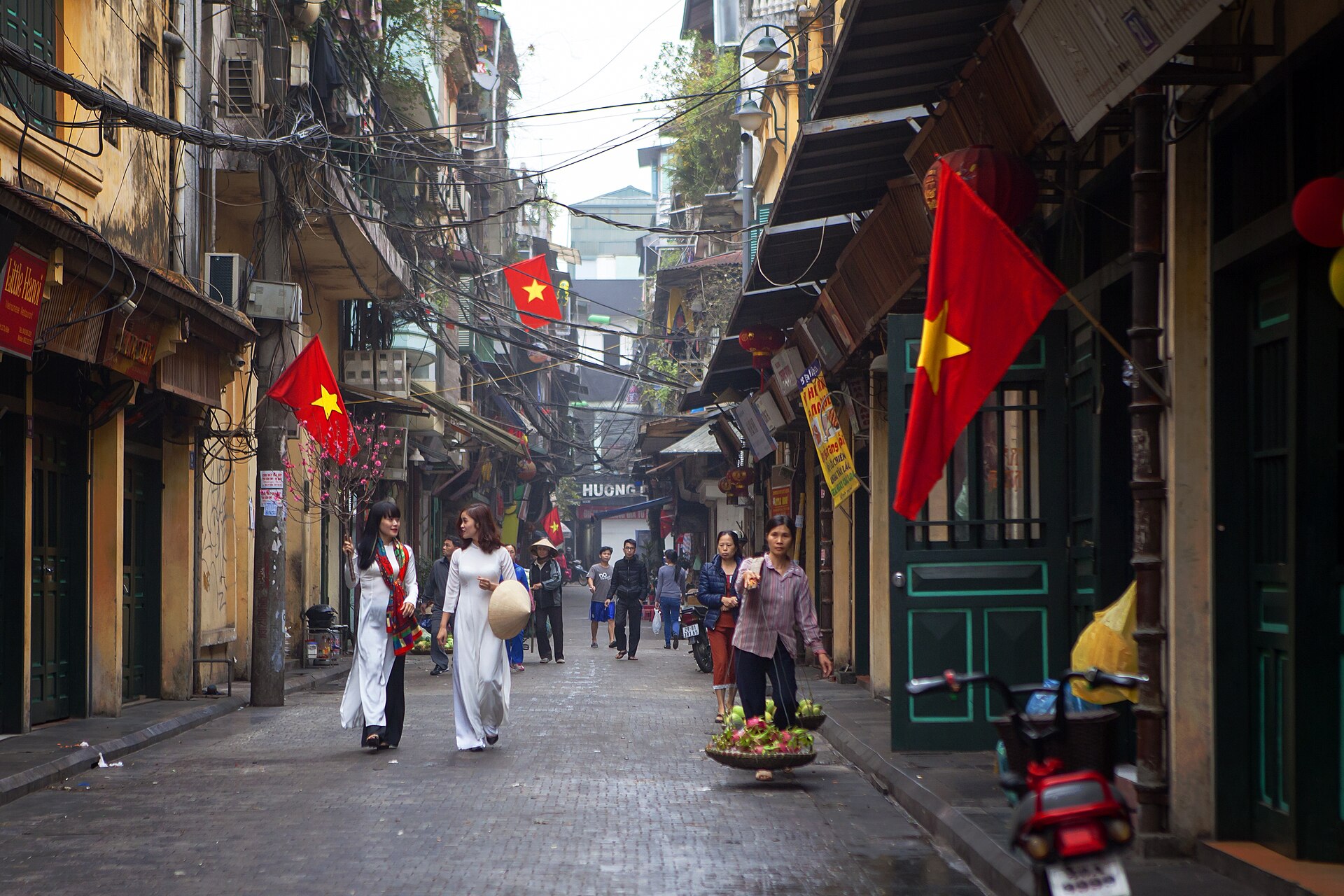
Hanoi's Old Quarter rewards a simple idea: eat one thing at a time, in the place that exists to serve it. The district north of Hoan Kiem Lake grew up as a grid of guild streets, traditionally counted as 36, each named for the trade that settled there and made goods for the Thang Long citadel beside it: Hang Bac for silver, Hang Gai for silk, Hang Ma for votive paper goods, Lan Ong for traditional medicine and herbs. The trades have thinned, but the principle survived intact and moved into the kitchens. The Old Quarter's famous food shops are specialists in the guild sense, one dish, one address, one serving window, repeated daily for decades. A street food walk here is therefore not a grazing tour. It is a sequence of single purpose stops, ordered by the hours each one keeps. This guide walks them in the order the day eats them. For the wider two day plan that this walk fits inside, our published 48 Hours in Hanoi covers the lake, the Temple of Literature and the water puppets; this piece is the food day, street by street.
How the walk works
Three ground rules make the difference between a good food day and a frazzled one. First, small portions and no seconds: every stop on this route is a full dish somewhere else, so eat as the locals do at a benchmark shop, one bowl or one set, then walk. Second, follow the serving windows rather than your appetite. The great pho shops are morning businesses, bun cha is a lunch dish in Hanoi and many of its best shops close by mid afternoon, and the evening belongs to a different set of streets entirely. Third, carry small cash notes and expect the plastic stool. The benchmark shops are small, fast and cash friendly, seating spills onto the pavement, and the bill at a street stop is a fraction of a sit down restaurant meal. None of the stops below needs booking, which is exactly why the guided version at the end of this piece earns its place for a first visit: the value is not access, it is knowing which door, which hour and what to order when there is no menu you can read.
Morning: Bat Dan and the pho hour
Start on Bat Dan, the street of earthenware bowls, at Pho Gia Truyen, number 49, the address most often named as Hanoi's benchmark beef pho. The pattern here is the morning pattern across the Quarter: doors open early, the broth is at its best in the first hours, and the shop serves until late morning and again in the early evening, with the lunch hours given over to other trades. Go before nine if you can. Order at the counter, take the bowl to a small table, and eat it the Hanoi way, with the clear, clean broth left largely alone: a squeeze of lime, chilli if you want it, and none of the herb plate abundance of the southern style. Hanoi pho is a plainer, more direct dish, and this bowl is the reference version.
From Bat Dan, walk east into the heart of the grid and take the morning slowly. This is the hour for the Quarter's coffee, but save the famous cup for later in the route, when it belongs. Use the late morning for the streets themselves: Hang Bac, where silversmiths made money and jewellery for the palace and jewellery shops still line the street, and Hang Ma, the most visual street in the district, stacked with votive paper, lanterns and seasonal decorations that change with the festival calendar. Neither is a food stop. Both explain the district you are eating in, and the walk between food stops is what keeps the day comfortable.
Midday: Hang Manh and the bun cha rule
Bun cha is Hanoi's lunch, and its most famous Old Quarter address is Bun Cha Dac Kim at number 1 Hang Manh, the street of bamboo blinds, at the western edge of the grid. The dish is a set, not a bowl: grilled pork patties and sliced pork in a light, warm dipping broth, a plate of rice vermicelli, and a pile of fresh herbs, assembled mouthful by mouthful. Dac Kim serves the full set through the middle of the day, and the honest advice is to arrive before the peak of lunch, when the small rooms fill completely and the pavement tables go first. If the queue defeats you, the rule rather than the address is what matters: any busy bun cha shop in the Quarter serving the full set at midday will show you the dish properly, and the famous alternative across town, the shop where a visiting American president ate bun cha in 2016, sits outside the Quarter and outside this walk.
A note on ordering, because bun cha confuses first timers more than any other Hanoi dish: the broth is a dip, not a soup, the noodles go in a few strands at a time with a piece of pork and herbs, and the fried spring rolls, nem cua be, are the standard addition if the shop offers them. Eat, pay, and leave promptly. These rooms turn over fast at lunch and the next party is waiting for your stool.
Afternoon: Cha Ca street and the dish that named it
The afternoon stop is the Old Quarter's purest guild story. Cha Ca La Vong, at number 14 on the street now called Cha Ca, has served one dish since 1871: fish marinated in turmeric and galangal, grilled, then finished at the table in a sizzling pan with dill and spring onions, eaten with rice vermicelli, peanuts and herbs. The restaurant became so identified with the dish that the street itself took the dish's name. There is effectively no menu decision to make, which makes it the easiest splurge on the route: sit down, the pan arrives, the staff will show you the assembly once, and the rest is yours. Vietnam's official tourism coverage names the same dish and the same restaurant as the Old Quarter original, and a century and a half of continuous service is its own verification.
Leave room, even now. The afternoon's second act is sweet and small: che, the family of Vietnamese sweet soups and desserts, sold from dedicated shops and stalls around the Quarter, lotus seed and black jelly among the classic versions, and the fruit and dessert stalls in and around Dong Xuan Market, the big covered market at the northern end of the Quarter. Dong Xuan is worth the walk in its own right as the district's working market, and its food alleys and surrounding lanes are the place for the snack layer of Hanoi eating: small fried cakes, noodle rolls and whatever the stall in front of you is turning out fastest. The market rule applies here as everywhere in this guide: the stall with the queue of locals is the recommendation.
Evening: egg coffee, then Ta Hien
Egg coffee is the stop that has to be timed as a pause, not a dessert chased after a meal. Cafe Giang, at 39 Nguyen Huu Huan on the eastern side of the Quarter, is the original: the cafe's founder created ca phe trung, coffee under a whipped egg yolk and condensed milk foam, in the 1940s, and the family still serves it in the same small premises, reached down an alley, in a cup set in warm water to keep the foam soft. Order the hot version first, whatever the weather. It is a five minute walk from the lake and it divides the day cleanly: sightseeing behind you, the evening in front.
The evening belongs to Ta Hien, the short lane at the Quarter's eastern edge that becomes bia hoi junction after dark. Bia hoi, the fresh, lightly carbonated draught beer brewed daily and delivered to small shops, is served by the glass at prices that have barely entered the modern economy, on the same plastic stools as everything else in this guide, with a street food menu of grilled meats, fried snacks and morning glory running alongside. Ta Hien on a weekend night is the Old Quarter at full volume, and the honest guidance is to go early in the evening for a seat you choose rather than the one that is left, eat one or two small plates, and treat the lane as the finale rather than the start of a long night. On Friday, Saturday and Sunday nights the streets around Hoan Kiem Lake close to traffic for the walking streets and the night market runs through the Quarter, both listed on our Hanoi calendar, and the walk home along the lake is the right ending.
Doing it guided, and staying in the grid
Everything on this route can be done alone with a map and this page, and regulars will tell you it should be. The case for the guided version is compression and confidence on a first visit: a good Old Quarter food tour strings the same specialists together in one evening, handles the ordering, and adds the stories attached to each shop.
Book the Old Quarter food tourvia Klook · affiliate link
For a private version in daylight, the guided highlights tour already wired on this site pairs the Quarter's streets with its street food in a single day.
Book the Hanoi highlights and street food tour with a local guidevia GoWithGuide · affiliate link
Stay inside the Quarter or on the lake's edge and the whole route is a walk from your door, which is the final practical point: this is a district to sleep in, not to commute to.
Stay in Hanoivia Trip.com · affiliate link
More reading on the articles page, or go straight to the events calendar.
Noteworthy events direct to your inbox.
Get what’s noteworthy for the weekend and beyond every Wednesday in your inbox.